On this page
- Key Takeaways
- What to Do Immediately After a Beverly Hills Hit-and-Run
- Reporting Requirements in California and Why Timing Matters
- How a Hit-and-Run Claim Can Work When the Driver Isn’t Found
- Evidence a Hit-and-Run Accident Lawyer Beverly Hills Will Commonly Pursue
- Key Deadlines and Legal Pathways: Insurance Claim vs. Lawsuit
- Damages You Can Potentially Recover After a Hit-and-Run
- Common Insurance Tactics in Hit-and-Run Cases (and How to Respond)
- How Attorneys Investigate Beverly Hills Hit-and-Runs
- Special Situations: Pedestrians, Rideshare, and Commercial Vehicles
- What a Hit and Run Accident Lawyer Beverly Hills Actually Does for Your Case
- Moving Forward After a Hit-and-Run Without Losing Leverage
- Frequently Asked Questions
- Get Guidance on Your Beverly Hills Hit-and-Run Claim
Key Takeaways
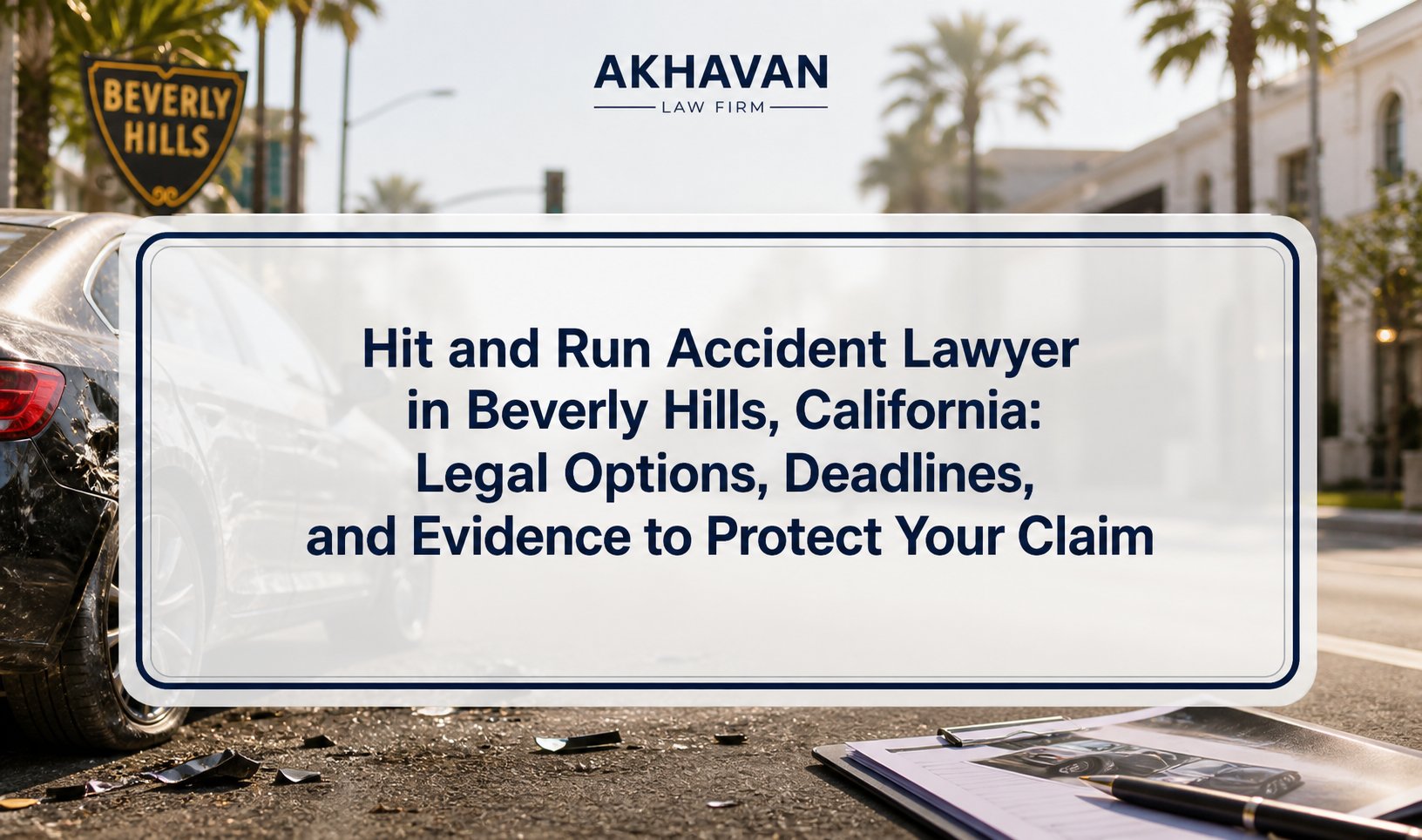
After a Beverly Hills hit-and-run, prompt reporting, careful documentation, and early evidence preservation can protect your ability to pursue compensation—often through uninsured motorist coverage or other insurance options even if the driver isn’t found. Because strict time limits and policy requirements can apply, early legal guidance can help prevent procedural mistakes and coverage disputes.
- Immediate Actions and Documentation: Safety, calling 911, photographing injuries and the scene, gathering witness contacts, and writing down vehicle details can help law enforcement and insurers reconstruct what happened.
- Timing-Driven Reporting Requirements: California hit-and-run claims often depend on prompt police reporting, timely insurer notice, and completing required DMV reporting (such as an SR-1 when injury/death or qualifying property damage is involved) to avoid lost evidence and coverage disputes.
- Recovery Paths Without Identifying the Driver: Even when the at-fault driver is unknown, you may still seek recovery through UM coverage for injuries and potentially collision, MedPay, or health insurance for repairs and treatment, though insurers often scrutinize hit-and-run claims and require specific proof.
A Hit and Run Accident Lawyer Beverly Hills can help identify responsible parties, preserve evidence, and pursue compensation through an insurance claim or lawsuit when the at-fault driver leaves the scene. In California, reporting requirements and strict time limits can affect your ability to recover damages, so early legal guidance often matters.
Hit-and-run cases can turn on practical proof such as surveillance video from nearby businesses, traffic-camera footage where available, witness statements, vehicle debris, and your medical records. Prompt medical care and documenting injuries, property damage, and the crash location can also support your claim and reduce disputes about how the collision happened.
This guide explains your legal options after a Beverly Hills hit-and-run, key deadlines that may apply, and the types of evidence attorneys typically seek to protect and strengthen a claim.
What to Do Immediately After a Beverly Hills Hit-and-Run
The actions you take in the first minutes and hours after a hit-and-run can affect your safety, your medical outcome, and the strength of any insurance claim or lawsuit. Focus on getting help, preserving evidence, and making the required reports.
Even when the other driver is gone, the scene can still provide crucial proof—vehicle parts, paint transfer, skid marks, and the positions of cars or bicycles. If you are physically able, take steps that help law enforcement and your insurer reconstruct what happened.
- Move to a safe location if you can do so without risking further injury.
- Call 911 and request police and medical assistance.
- Photograph and/or video:
- Your injuries (if visible) and any torn or blood-stained clothing
- Damage to your vehicle or bicycle, including close-ups
- The roadway, intersection, traffic signals, and any skid marks or debris
- Nearby businesses or residences that may have cameras facing the street
- Write down what you remember while it’s fresh:
- Time, location, and direction of travel
- Vehicle description (make/model, color, body style), partial plate, decals, rideshare/truck markings
- Description of the driver (if seen) and the path they fled
- Get contact information for witnesses and ask them to stay until police arrive when possible.
- Avoid speculating about fault in conversations at the scene; stick to observable facts.
If you need a more detailed checklist, review the steps you need to take after an auto accident and adapt them to the hit-and-run context.
Reporting Requirements in California and Why Timing Matters
California hit-and-run claims often rise or fall on prompt reporting to police and timely notice to insurers. Delays can make evidence disappear and can also create avoidable coverage disputes.
Police reports are commonly a foundational document in these cases because they capture the time, location, initial statements, and sometimes a preliminary assessment of how the collision occurred. They also establish that the crash was reported as a hit-and-run, which may matter for uninsured motorist (UM) coverage.
- Law enforcement report: Call 911 from the scene for injury crashes; for non-emergency situations, follow local guidance to file a report as soon as practical.
- DMV reporting: California generally requires an SR-1 report to the DMV within a short time window when there is injury/death or property damage above the statutory threshold; missing this can create complications.
- Insurance notice: Many policies require prompt notice; waiting can give an insurer grounds to argue prejudice or deny portions of a claim depending on the facts.
Because deadlines and procedural rules can vary by claim type (insurance claim versus lawsuit, adult versus minor, public entity involvement, etc.), a Hit and Run Accident Lawyer Beverly Hills will typically map out the relevant time limits early and help ensure notices and filings are completed correctly.
How a Hit-and-Run Claim Can Work When the Driver Isn’t Found
You may still have viable financial recovery options even if the fleeing driver is never identified. The most common pathway is a claim through your own insurance, but other sources may exist depending on the facts.
Many people assume there is “no case” without the at-fault driver’s identity. In reality, a claim can sometimes be built around physical evidence and your medical documentation, especially where uninsured motorist coverage applies.
Uninsured motorist (UM/UIM) coverage and hit-and-runs
UM coverage may apply when the at-fault driver is unknown or uninsured, but insurers often require specific proof and timely reporting. The exact requirements depend on your policy language and the facts.
- UM may help cover bodily injury damages when the other driver can’t be identified.
- Some policies treat “hit-and-run” differently for vehicle damage versus injury; confirm your coverages.
- Insurers often scrutinize hit-and-run claims closely, so documentation matters.
Collision coverage, MedPay, and health insurance
When UM doesn’t apply or is disputed, other coverages may still help with early expenses. Coordinating benefits carefully can reduce out-of-pocket costs and avoid repayment surprises later.
- Collision coverage: Often pays to repair your car (subject to deductible), regardless of fault.
- Medical Payments (MedPay): Can help with initial medical bills, depending on limits and terms.
- Health insurance: Usually a primary source for treatment, though reimbursement liens can arise.
When another party may be responsible
Some cases involve additional liable parties beyond the unknown driver, but those claims require careful investigation and proof. These are fact-specific and not available in every hit-and-run.
- Employer liability: If the fleeing driver was working at the time and later identified.
- Vehicle owner liability: If the driver is identified and different from the owner.
- Roadway-related claims: If a dangerous condition contributed (these can involve strict procedural notice requirements when a public entity is involved).
Evidence a Hit-and-Run Accident Lawyer Beverly Hills Will Commonly Pursue
Because the other driver leaves, hit-and-run cases tend to be evidence-driven and time-sensitive. The goal is to identify the vehicle/driver and corroborate your account using independent sources.
In Beverly Hills, potential evidence sources can include surrounding retail, hospitality, and residential camera systems along major corridors. But many systems overwrite footage quickly, so fast action is important.
Video and digital evidence
Video can be powerful because it is time-stamped and less vulnerable to memory drift. Even partial footage may capture the direction of travel or a unique vehicle feature.
- Business surveillance cameras (storefronts, garages, hotels, restaurants)
- Residential cameras (doorbell and exterior systems)
- Dashcam footage from your vehicle or bystanders
- Photos or videos taken by witnesses
- Cell phone location data and call logs (helpful for timelines, when relevant)
Physical evidence from the scene and vehicles
Vehicle debris, paint transfer, and damage patterns can help match a suspect vehicle later. Preserve what you can safely collect and photograph, and avoid altering damaged areas before documentation.
- Broken headlamp fragments, mirror parts, trim pieces
- Paint transfer or scrape patterns indicating vehicle height and angle
- Tire marks, gouges, and final rest positions
- Your vehicle’s event data recorder (EDR) data in some crashes
Medical records and injury documentation
Medical evidence links the collision to your injuries and demonstrates severity and treatment needs. Gaps in care can invite insurers to argue your injuries were minor or unrelated.
- ER/urgent care records and imaging results
- Follow-up treatment notes (orthopedics, PT, chiropractic, neurology)
- Photographs tracking bruising, swelling, and healing over time
- Work status notes and functional limitations documentation
Witness statements and consistency
Independent witnesses can help establish that a hit-and-run occurred and clarify fault issues. Obtaining statements early can reduce later changes in memory.
- Names, phone numbers, and emails of witnesses
- Short written or recorded statements about what they saw
- Details like direction of travel, color, partial plate, and distinctive vehicle damage
Key Deadlines and Legal Pathways: Insurance Claim vs. Lawsuit
Most hit-and-run matters involve an insurance claim first, but some require litigation—especially if coverage is denied, undervalued, or a responsible party is identified. Understanding the pathway helps you avoid missed opportunities.
California time limits vary by claim type, and additional rules may apply if a public entity could be involved. Because the right approach depends on facts and coverage, legal guidance early can prevent procedural mistakes.
| Claim Type / Issue | What It Typically Involves | Practical Timing Considerations |
|---|---|---|
| Police report and documentation | Creating an official record of the hit-and-run, collecting initial statements, and documenting the scene | Report as soon as possible; delays can reduce investigative leads and camera availability |
| Uninsured motorist (UM) claim | Seeking injury compensation through your own policy when the at-fault driver is unknown/uninsured | Policies often require prompt notice and specific proof; confirm requirements early |
| Property damage claim (collision or UM property damage if applicable) | Repair costs, total loss evaluation, towing/storage, and rental car issues | Photograph before repairs; avoid disposing of parts that could identify the other vehicle |
| Injury lawsuit (if a liable party is identified) | A civil case seeking damages beyond or instead of insurance payments | Strict statutes of limitation can apply; early evaluation helps preserve claims |
| Potential public entity claim (dangerous roadway condition) | Claims involving government agencies can require special notice procedures | Notice deadlines may be much shorter than standard injury cases; investigate quickly |
Damages You Can Potentially Recover After a Hit-and-Run
Compensation in a hit-and-run can include both financial losses and the human impact of the injury. The categories available depend on the coverage source and the specific legal claim.
In injury cases, insurers and juries generally focus on documentation: bills, records, wage information, and credible descriptions of how the injury changed your daily life. A well-supported claim can also reduce disputes about whether treatment was necessary.
- Medical expenses: ER care, imaging, surgery, medications, PT, and future care when supported.
- Lost income: Missed work time and, in some cases, reduced earning capacity.
- Property damage: Vehicle repair/total loss, towing, storage, and rental car costs (depending on coverage).
- Pain and suffering: Physical pain, limitations, and reduced quality of life where available under the claim.
- Out-of-pocket costs: Mileage to appointments, medical equipment, household help tied to limitations.
If the crash caused a fatality, surviving family members may need guidance about wrongful death damages and timelines; in those situations, reviewing a dedicated resource on wrongful death claims can be helpful.
Common Insurance Tactics in Hit-and-Run Cases (and How to Respond)
Hit-and-run claims are often heavily scrutinized because the other driver is absent and insurers may worry about fraud or uncertainty. Knowing the friction points helps you prepare and avoid unforced errors.
Even when you did everything right, insurers may challenge what happened, how badly you were hurt, or whether treatment was related. Strong documentation and careful communication can reduce avoidable delays.
- “We can’t confirm it was a hit-and-run.” Support the claim with a police report, witness info, photos, debris evidence, and consistent medical history.
- Recorded statement pressure. You can ask for questions in writing or request time to consult counsel before giving a recorded statement.
- Disputes over injury causation. Early medical evaluation and consistent follow-up can help connect symptoms to the collision.
- Low valuation based on minimal vehicle damage. Some injuries occur even with limited visible damage; imaging and clinical findings matter.
- Gaps in treatment used against you. If you must pause treatment, document why (cost, scheduling, referral delays) and resume appropriately.
How Attorneys Investigate Beverly Hills Hit-and-Runs
Investigation is often what turns a frustrating “unknown driver” situation into a provable claim. A lawyer’s job is to gather evidence efficiently and build a clear liability and damages narrative.
Not every case results in identifying the driver, but even partial identification (vehicle make, plate fragment, or fleet marking) can narrow the search and support UM negotiations. Investigation may also reveal third-party responsibility, depending on the facts.
- Scene analysis: Reviewing photos, measurements, roadway layout, and impact points.
- Camera canvass: Contacting nearby properties quickly to request preservation of footage before it overwrites.
- Witness outreach: Re-contacting witnesses for clarifications and verifying details.
- Vehicle and repair review: Looking at damage patterns, estimates, and any retained parts/debris.
- Medical chronology: Organizing records to show symptom onset, diagnostics, treatment, and progress.
- Coverage and policy analysis: Confirming UM/MedPay/collision terms and potential offsets or liens.
For additional context on how these matters are evaluated and resolved, you may also want to read about how car accident cases are settled.
Special Situations: Pedestrians, Rideshare, and Commercial Vehicles
Hit-and-runs don’t always involve two private passenger cars. The claim structure can change when the victim is a pedestrian/cyclist or when the at-fault vehicle may be commercial or app-based.
These scenarios can involve different insurance layers, additional evidence sources, and different dispute patterns. Identifying the type of vehicle early helps guide what to look for.
Pedestrian or bicycle hit-and-run
Pedestrians and cyclists are more likely to suffer serious injury, and the evidence can be quickly lost if the scene isn’t documented. Clothing damage, helmet damage, and body-worn items can all matter.
- Photograph shoes, clothing, helmet, and damaged personal items before cleaning or discarding.
- Map your walking/riding path and the vehicle’s direction of travel.
- Check for nearby cameras facing sidewalks, crosswalks, or driveways.
Rideshare and delivery vehicles
If a fleeing vehicle may have been an Uber/Lyft or a delivery driver, app activity and commercial policies could become relevant once the vehicle/driver is identified. Until then, UM coverage and early evidence preservation are often central.
- Look for distinctive vehicle markings, windshield stickers, phone mounts, or roof signs.
- Capture witness statements about whether the driver appeared to be picking up/dropping off.
- If you were a passenger, save trip screenshots and receipts.
Commercial trucks or buses
Commercial vehicles can leave unique debris and often travel predictable routes, which can help the investigation. If you suspect a larger vehicle, try to recall company colors, logos, or any DOT-style markings.
- Note the vehicle height and type (box truck, semi, bus, shuttle, dump truck).
- Preserve photos of impact points that suggest underride or side-swipe patterns.
- Ask witnesses whether they saw branding, a fleet number, or a company name.
What a Hit and Run Accident Lawyer Beverly Hills Actually Does for Your Case
Legal representation is not only about filing a lawsuit; it is often about building proof, coordinating claims, and negotiating from a position supported by documentation. In hit-and-run matters, that support can be the difference between a quick denial and a serious evaluation.
While every case is different, clients often need help with both the investigative side and the insurance process. The work is typically geared toward minimizing disputes and maximizing what the evidence can reliably support.
- Preserving camera footage by sending prompt requests to businesses and property owners
- Collecting and organizing medical records and bills into a clear timeline
- Handling insurer communications to reduce misstatements and unnecessary admissions
- Evaluating whether additional parties may be responsible if the driver is identified later
- Preparing a demand package and negotiating settlement where appropriate
- Litigating when the insurer denies coverage, undervalues injuries, or liability is contested
More broadly, a personal injury lawyer focuses on proving liability and damages through admissible evidence, while also navigating the procedural rules that can derail otherwise valid claims.
Moving Forward After a Hit-and-Run Without Losing Leverage
The strongest hit-and-run cases tend to combine fast reporting, careful documentation, and consistent medical follow-through. When you treat the situation as time-sensitive from day one, you give yourself more options—whether the driver is found or not.
If you are dealing with vehicle repairs, medical appointments, and insurer calls all at once, consider prioritizing tasks that are hard to recreate later. In many cases, it helps to create a simple “claim folder” and update it weekly.
- Keep a running log of symptoms, limitations, and missed activities.
- Save every bill, estimate, receipt, and insurer letter/email in one place.
- Write down the names and claim numbers for every adjuster you speak with.
- Before repairs, take comprehensive photos and ask the shop to retain any unusual debris or parts if feasible.
- Consider getting guidance early if:
- You have head, neck, or back symptoms
- You missed work or expect extended treatment
- Your UM claim is questioned or delayed
- You believe there may be video evidence that could be overwritten
If your hit-and-run involved a standard vehicle collision, learning more about the broader process can be useful; you can also explore car accident representation options for related claims that arise from the same incident.
Frequently Asked Questions
Get Guidance on Your Beverly Hills Hit-and-Run Claim
After a hit-and-run, it’s easy to feel stuck—especially if the driver isn’t identified and you’re juggling medical care, vehicle repairs, and insurer requests. Speaking with a lawyer can help you understand which coverages may apply, what documentation matters most, and how to protect key evidence like video footage and witness information before it’s lost.
Getting support early can also reduce avoidable disputes about reporting, timelines, and injury documentation, so your claim is evaluated on clear facts rather than gaps or guesswork.
Disclaimer: The information provided on this page is for general informational purposes only and should not be considered legal advice. Reading this page, using this website, or contacting us through this page does not create an attorney-client relationship. Every legal matter is different, and the information here may not apply to your specific situation. You should not act or rely on any information on this page without first consulting a qualified attorney about your individual case.

Edwin E. Akhavan is the founding attorney of Akhavan Law Firm APC, a personal injury law firm in Beverly Hills, California. State Bar of California #270338. About the firm