
Freeway Accident Lawyer in California
Injured in a crash on a California freeway or highway? You generally have two years to file an injury claim — and as little as six months if a dangerous roadway condition or a government vehicle was involved. Talk to us before you speak to another driver’s insurer.
Our Recent Wins
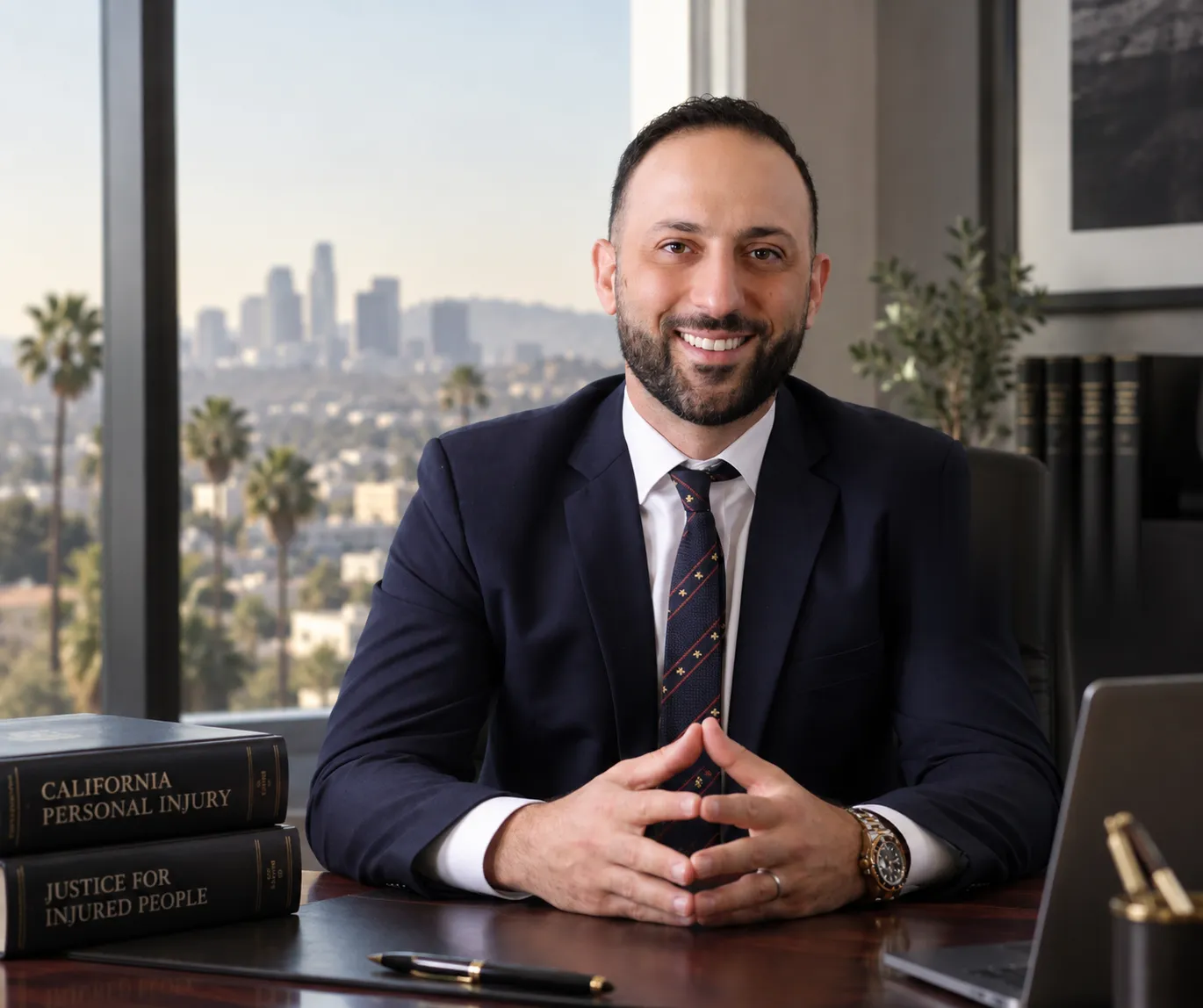
Reviewed by Edwin Akhavan, Founding Attorney, Akhavan Law Firm APC·California State Bar #270338
California legal deadlines
In California you generally have
2years
from the date of a freeway crash to file a personal injury lawsuit against a driver or company (Code of Civil Procedure § 335.1)
6months
to present a written claim when Caltrans or another public entity may be responsible (Government Code § 911.2).
Drivers must also file an SR-1 report with the DMV within 10 days if anyone was injured or killed, or if property damage exceeds $1,000 (Vehicle Code § 16000).
Damage to your vehicle runs on a separate clock — generally three years from the crash (Code of Civil Procedure § 338).
The six-month government deadline is the one most often missed in freeway cases, because nobody is thinking about the road itself in the first weeks. Miss it and a strong claim can end before it starts.
A Freeway Crash Is Rarely a Two-Car Story
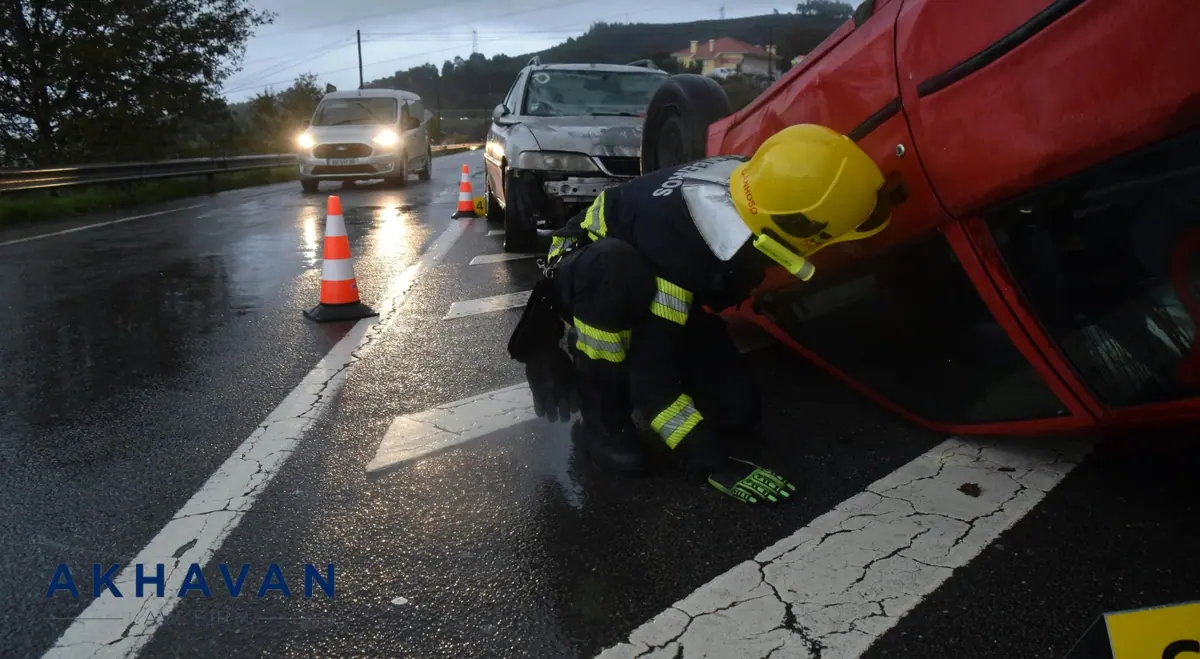
At freeway speed there is no such thing as a minor impact. One abrupt lane change or one sudden slowdown can pull in four vehicles, three insurers and four different accounts of what happened — each one placing the blame somewhere else.
Every driver in a chain reaction believes they were pushed into the vehicle ahead. Some of them are right. Sorting out who struck whom first is a physical question, and the answer decides who pays.
That is why these cases are won with evidence rather than statements. The California Highway Patrol report, the damage pattern across every vehicle, the lane positions, the data stored in commercial trucks and any camera footage establish the sequence.
Meanwhile the adjusters start calling, often several of them. Each is measured on what the claim costs their own company, and each has a reason to move fault onto someone else, including you. A recorded statement given while you are still shaken makes that easier.
Freeway claims also raise questions an ordinary street collision does not. Was a big rig over its speed limit? Was a disabled vehicle left in a traffic lane? Did debris, a work zone or the design of the roadway play a part? Each of those points to a different defendant, a different insurer and sometimes a much shorter deadline.
California Freeway Accident Rules That Decide Your Claim
| Rule | What California law requires |
|---|---|
| Deadline to sue for injuries | 2 years from the date of the crash (Code of Civil Procedure § 335.1). The same two-year period applies to a wrongful death claim, running from the date of death. |
| Deadline for vehicle and property damage | 3 years from the date of the crash (Code of Civil Procedure § 338). This is a separate clock from the injury deadline. |
| Claims against Caltrans or another public entity | A written claim is generally due within 6 months (Government Code § 911.2) before any lawsuit over a dangerous condition of the roadway, or a crash with a government vehicle. If the claim is formally rejected, suit must usually follow within 6 months of the rejection notice (§ 945.6). |
| Who investigates | The California Highway Patrol has jurisdiction over freeway collisions. City police handle surface streets, so the agency can change at the off-ramp. The CHP traffic collision report is the starting document in almost every freeway case. |
| Reporting the crash | A crash involving injury or death must be reported to the CHP or police within 24 hours (Vehicle Code § 20008). Drivers must also file a DMV SR-1 within 10 days when anyone is injured or killed, or property damage exceeds $1,000 (Vehicle Code § 16000). |
| Speed and following distance | The basic speed law prohibits driving faster than is safe for conditions, whatever the posted limit (Vehicle Code § 22350), and drivers may not follow more closely than is reasonable and prudent (§ 21703). Both are the usual issues in chain-reaction crashes. |
| Truck speed limit | Vehicles towing a trailer and most trucks with three or more axles are limited to 55 mph statewide (Vehicle Code § 22406), even where cars may lawfully travel faster. |
| Move over for stopped vehicles | Drivers must move over or slow down for stopped vehicles displaying warning lights, including emergency, tow and Caltrans vehicles (Vehicle Code § 21809). This rule is central to many shoulder and secondary-collision cases. |
| If you were partly at fault | California uses pure comparative fault (Li v. Yellow Cab Co. (1975) 13 Cal.3d 804). Responsibility can be divided among several drivers, and your recovery is reduced by your own share rather than barred. |
| Minimum liability insurance | Since January 1, 2025, California minimums are $30,000 per person, $60,000 per accident and $15,000 property damage (Senate Bill 1107, 2022). In a multi-vehicle crash the per-accident limit is shared among everyone that driver injured. |
| If the driver fled or had no insurance | Your own uninsured and underinsured motorist coverage may respond (Insurance Code § 11580.2). For a hit-and-run, the statute generally requires physical contact with the other vehicle, a police report within 24 hours and a sworn statement to your insurer within 30 days. |
Major Causes of Freeway Accidents in California
Freeway collisions follow patterns. They cluster at merges, lane drops and the sudden slowdowns that form without warning, and the cause usually maps onto a specific traffic law — which matters, because a violation is strong evidence of negligence.
Unsafe speed for conditions
The basic speed law (Vehicle Code § 22350) prohibits driving faster than is safe for conditions, even when the driver is under the posted limit. Fog, rain, glare and dense traffic all change what safe means, and at freeway speed the margin for error is small.
Following too closely and chain reactions
Drivers may not follow more closely than is reasonable and prudent (Vehicle Code § 21703). When traffic stops abruptly, one driver without enough room starts a sequence that can involve many vehicles. Liability then depends on the order of impacts, not on where each vehicle came to rest.
Unsafe lane changes and merges
Blind-spot sideswipes, late moves toward an exit and short on-ramps meeting fast traffic are behind a large share of freeway crashes. A sideswipe at speed often sends one vehicle across several lanes and into others.
Distracted driving
California bans holding a phone while driving and bans texting outright (Vehicle Code §§ 23123, 23123.5). Phone records, infotainment data and app timestamps can often establish what a driver was doing in the seconds before impact.
Impaired and wrong-way driving
Driving with a blood alcohol level of 0.08% or higher is illegal (Vehicle Code § 23152), and impairment by cannabis or prescription medication counts too. Wrong-way and impaired driving collisions on freeways tend to be among the most severe. A criminal conviction can support the civil claim.
Big rigs and commercial trucks
Most trucks with three or more axles, and any vehicle towing a trailer, are limited to 55 mph (Vehicle Code § 22406). Driver fatigue, federal hours-of-service limits and unsecured loads are recurring issues. The consequences scale with the weight, and the motor carrier behind the driver is usually a defendant too.
Disabled vehicles and shoulder collisions
A stalled vehicle in a lane or on the shoulder invites a secondary collision, which is often worse than the first event. Drivers must move over or slow down for stopped vehicles displaying warning lights, including emergency, tow and Caltrans vehicles (Vehicle Code § 21809).
Road defects, debris and work zones
Sometimes a defendant is a public entity or a contractor rather than a driver: a defective design, missing signage, a failed barrier, an unrepaired hazard or a poorly marked lane closure (Government Code § 835). Claims against public entities carry the six-month deadline, which is why they are so often lost.
Hear From Our Clients About Us!
Posted on Google
 Candelario Morales
Trustindex verifies that the original source of the review is Google.
Me gusta como me atendió Alejandra la salvadoreña y me explicó cómo puede ser mi trato con el abogado y los procedimientos para mi revisión de las lesiones causadas por el accidente sufrido el 03/08/2026 con un médico especialista quien determinará cuáles son los procedimientos a seguir médicamente. Muchas gracias por tener gente con excelente actitud y responsabilidad de su trabajo. Gracias.Posted on Google Raysha Blalock
Trustindex verifies that the original source of the review is Google.
Akhavan Law Firm works hard to give you the compensation you deserve.Posted on Google RonnelI’m very happy with this firm. They were professional, responsive, and made the whole process smooth and stress-free. Highly recommend!Posted on Google
 Damian M. CisnerosEd and his wonderful team at the Akhavan Law Firm really followed through on their guarantee of getting me the highest compensation! Furthermore, the communication and process was very convenient. They also kept me updated on every step. Thank you so much for everything, I truly appreciate your support!Posted on Google
 Nidia LopezService was great and everything was done in a timely manner. Definitely recommendPosted on Google
 edwin guidoThank you for the hard work and for the special care you provided for me. Your team always made sure I was updated and I very much appreciate the most generous amount of monies that was won in my case. 5 star treatment across the board! Thank you so much.Posted on Google
 LuisMi experiencia con este abogado fue muy buena, me guiaron con los doctores paso a paso y resolviendo mis exigencias porque quise cambiar de terapeuta porque no me encontraba bien con el que estaba y puedo decir que lo hicieron de manera rápida, así que lo aconsejo porque incluso cuando necesite ayuda estuvieron siempre disponibles. Resolvieron mi caso, antes de lo esperado y con óptimos resultados.Posted on Google
 Joe GlaserAkhavan law firm came recommended by a friend who had a good experience and I’m so glad because my experience turned out great as well. Got rear ended and hurt my neck pretty badly, they helped me get treatment and I didn’t have to pay anything. Just put my trust in Ed and his team to take care of everything and they got an insurance settlement that was more than expected. Ed went to bat for me and followed through. Highly recommend.Posted on Google
 Genises OrdonezAbout two years ago, I was in an accident that left me with a back injury, and I honestly didn’t know where to turn. Working with Ed completely changed my life for good. He truly fought hard for me every step of the way, listened to me, and made sure I always felt supported and understood. I never once felt like just another case — he really cared. I also want to give a huge thank you to Stephanye, who was my main point of contact throughout the whole process. She was so kind, patient, and always there when I had questions or just needed reassurance. She made such a big difference for me and I’m so grateful for her. I can’t say enough good things about Ed and Stephanye. They were there for me during one of the hardest times of my life, and because of them, things turned around for the better. I’m beyond thankful and would recommend them to anyone who needs people who will truly fight for you and be there for you.Verified by TrustindexTrustindex verified badge is the Universal Symbol of Trust. Only the greatest companies can get the verified badge who has a review score above 4.5, based on customer reviews over the past 12 months. Read more
Freeway Accident Injuries We Represent
Speed multiplies force, and many freeway crashes involve more than one impact. The injury drives the value of the claim, and documentation from day one is what keeps an insurer from disputing it.
Neck and soft tissue injuries
Whiplash, sprains, strains and disc irritation are common in rear-end and chain-reaction crashes, where the body may be thrown forward and back more than once. Adjusters routinely call them minor or pre-existing, which is why consistent treatment records matter.
Traumatic brain injury
A concussion does not require losing consciousness. Headaches, light sensitivity, irritability, word-finding trouble and difficulty concentrating are all reportable symptoms, and they often surface days after a high-speed impact.
Spinal cord and back injuries
Herniated discs, nerve impingement and vertebral fractures can require injections, surgery or lifelong management. Complete or partial paralysis changes the entire structure of a claim, including future care costs.
Fractures and orthopaedic trauma
Broken wrists, ribs, hips, pelvises and legs frequently mean surgery, hardware and months of rehabilitation. The lost-income component alone can exceed the medical bills.
Internal injuries and organ damage
Internal bleeding and organ trauma can be life-threatening and are not always obvious on the shoulder of a freeway. This is the main reason we urge same-day medical evaluation even when you feel able to walk away.
Catastrophic and permanent injuries
Amputation, severe burns, crush injuries and injuries requiring lifetime attendant care are more likely where a big rig or a vehicle fire is involved. They call for life-care planning and economic expert analysis to value properly.
Wrongful death
When a freeway crash is fatal, California law allows specified surviving family members to bring a wrongful death claim (Code of Civil Procedure § 377.60), and the estate may bring a separate survival action.
Psychological injuries
Post-traumatic stress, anxiety about driving on the freeway again and depression are real consequences of a serious collision and are compensable when properly diagnosed and documented.
After a freeway crash in California: what to do
Get out of the traffic lanes if you safely can
Secondary collisions are among the most dangerous freeway events. Move to the shoulder or beyond, and stay behind a barrier where one exists.
Call 911 and wait for the CHP
A crash with injury or death must be reported within 24 hours (Vehicle Code § 20008). The CHP report, the incident number and the officer’s diagram are the backbone of the claim.
Get checked the same day
Adrenaline masks injury. Head, neck and back symptoms often appear a day or two later, and a gap in treatment is the first thing an adjuster points to.
Photograph every vehicle involved
Not just yours, and only if it is safe. Damage on each vehicle, the final positions and the debris field are what establish the order of impacts.
Identify commercial vehicles properly
Record the USDOT number and the name on the door of any truck. The motor carrier is often not the name painted on the trailer.
Note the road conditions
Debris, potholes, missing signage, an active work zone or a damaged barrier can shift responsibility — and may start a six-month clock.
Get witness names and do not argue fault
Other drivers saw only part of the sequence, and so did you. Collect names and numbers, exchange information, and do not apologise or speculate.
File the DMV SR-1 and decline recorded statements
Drivers must file the SR-1 within 10 days when anyone is injured or killed, or property damage tops $1,000 (Vehicle Code § 16000). You are not required to give another driver’s insurer a recorded statement.
Talk to a lawyer before accepting anything
Several insurers may be involved, and an early offer usually arrives before the full picture of your injury exists. Once you sign a release, that claim is over, including for treatment you have not had yet.
Speak With a California Freeway Accident Lawyer Today
If you were injured in a freeway accident in Los Angeles or anywhere in California, you do not have to handle the claim alone. Akhavan Law Firm can review what happened, explain your legal options, and help you take the next step with confidence.
Call +1 310-694-8999 today to request a free consultation with a California freeway accident lawyer. The sooner you get guidance, the easier it may be to protect evidence, manage insurance communication, and move your claim forward.
Experience recovering millions for clients
Aggressive negotiation with insurance companies
No fee unless we win
Personalized, one-on-one attention
Full support from investigation to settlement
Available 24/7
Schedule a Free Consultation with a California Freeway Accident Lawyer
Do not wait to get legal help after a serious freeway accident. Akhavan Law Firm can review your case, explain your options, and help you take the next step toward recovery.
No Win, No Fee — How Our Contingency Fee Works
You pay us nothing up front. Our fee is a percentage of what we recover for you, and if we recover nothing, you owe us no attorney’s fee.
California requires contingency fee agreements to be in writing and to state the fee rate, how costs affect your recovery, and that the rate is negotiable and not set by law (Business & Professions Code § 6147). You receive a signed copy before we begin.
We also explain case costs plainly — filing fees, records, expert witnesses — and how they are handled, before you decide whether to hire us. The consultation itself is free, with no obligation to proceed.
Working with our firm
We are a California personal injury firm led by founding attorney Edwin Akhavan, California State Bar #270338. We handle freeway accident claims across the state, from disputed liability cases to catastrophic injury and wrongful death matters. Our main office is in Beverly Hills and we keep offices throughout California, so a local meeting is usually possible without a long drive. We work with clients in English and Spanish.
Freeway Accident Help Across California
This page covers the statewide rules. For the courts, police agencies and roads where your crash actually happened, start with the office closest to you.
Related practice areas
Some crashes fall under their own rules. If yours involved one of these, that page will be more specific:
Reviewed by Edwin Akhavan, Founding Attorney, California State Bar #270338
Free Case Review
Injured in a Freeway Accident?
Tell us how to reach you. Our team will review your inquiry.
Common questions answered
A freeway crash raises questions quickly: who was at fault when several vehicles were involved, which insurer pays, and how long you have to act. Below are plain answers to the questions we hear most from people injured on California freeways and highways. They are general information; a free consultation is the place to talk about your own situation.
Freeway Accident Questions We Hear Most
Who investigates a freeway accident in California?
The California Highway Patrol has jurisdiction over collisions on California freeways. The CHP traffic collision report, with its diagram and statements, is normally the starting document in a freeway case.
City police handle surface streets, so the agency can change the moment you leave the off-ramp. We obtain the report and any supplemental investigation for you.
Who is at fault in a chain-reaction crash?
It depends on the order of impacts, not on who ended up where. A driver who was pushed into the vehicle ahead may bear little or no responsibility, while the driver who struck first may bear most of it.
Damage patterns, debris distribution, final rest positions and vehicle data establish the sequence, and California’s pure comparative fault rules allow responsibility to be divided among several drivers.
How long do I have to file a freeway accident claim in California?
Most injury lawsuits must be filed within two years of the crash (Code of Civil Procedure § 335.1), and vehicle damage claims within three years (§ 338). If a public entity or a government vehicle contributed, you generally have only six months to present a government claim (Government Code § 911.2). Evidence such as commercial truck data can be lost far sooner than any of these deadlines, so call early.
Can I bring a claim against Caltrans for a dangerous road condition?
Sometimes. A claim for a dangerous condition of public property — a defective design, missing signage, an unrepaired hazard or an unsafe work zone — can be brought against the responsible public entity, but a written government claim must generally be presented within six months before any lawsuit.
That is much shorter than the two-year deadline for suing a driver, and these cases have their own defences, so the roadway question should be evaluated at the outset.
What if a big rig was involved?
The case changes substantially. Motor carriers are subject to federal hours-of-service rules and generally carry far more liability coverage than a passenger vehicle, and electronic logging and engine data can show speed, braking and time on duty.
That data is not kept indefinitely. A written demand to preserve it should go to the carrier as soon as possible.
What if I was hit while stopped on the shoulder?
You may still have a strong claim. The basic speed law requires every driver to travel at a speed that is safe for conditions, and drivers must move over or slow down for stopped vehicles displaying warning lights, including emergency, tow and Caltrans vehicles (Vehicle Code § 21809). Shoulder and secondary collisions are often severe, and they frequently involve more than one at-fault driver.
The other drivers blamed me. What now?
Statements at a freeway scene are made by people who are shaken and saw only part of the sequence. Pure comparative fault means you can still recover even if you bear some responsibility; your compensation is reduced by your percentage of fault rather than eliminated. Do not give a recorded statement to another driver’s insurer before the evidence is reviewed.
What if the vehicle that caused the crash never stopped?
Uninsured motorist coverage on your own policy can apply to a hit-and-run. Under Insurance Code § 11580.2, that generally requires physical contact with the other vehicle, a report to police within 24 hours and a sworn statement to your insurer within 30 days. Freeway sideswipes are a common example, so report quickly.
What does it cost to hire Akhavan Law Firm?
Nothing upfront. We work on a contingency fee, so we are paid only if we recover money for you. There is no hourly billing and no fee if we do not win. The consultation is free, and we can meet you at the office, at home or at the hospital.
Do you help Spanish-speaking clients?
Yes. Se habla español. Our team handles consultations, documents and case updates in Spanish, and this page is also available in Spanish.
Areas We Serve
Akhavan Law Firm APC handles freeway accident claims throughout California. Our headquarters is in Beverly Hills and we have eleven more offices across the state, so you can meet an attorney close to home. Visit the office nearest you or call us today for immediate legal assistance.