On this page
- How to Find the Best Truck Accident Lawyer Near Los Angeles: A Step-by-Step Guide to Hiring Expert Legal Representation
- What Are the Immediate Steps to Take After a Truck Accident?
- Why Is Hiring a Specialized Truck Accident Lawyer Crucial?
- How Do I Choose the Best Truck Accident Lawyer Near Los Angeles?
- How Are Truck Accident Lawyer Fees Structured?
- What Is the Truck Accident Claim Process and Timeline?
- How Much Compensation Can I Expect from a Truck Accident Settlement?
How to Find the Best Truck Accident Lawyer Near Los Angeles: A Step-by-Step Guide to Hiring Expert Legal Representation
Truck collisions produce complex legal challenges that require specialized representation to preserve evidence, prove liability, and secure appropriate compensation. This guide helps readers find local truck accident lawyers near Los Angeles by explaining immediate post-accident steps, why truck cases differ from car crashes, how to evaluate and choose an attorney, fee structures, the claim timeline, and realistic settlement expectations. Many victims face overwhelming medical bills, insurance pressure, and rapidly disappearing electronic evidence; the right attorney protects rights and marshals experts to reconstruct the event. Read on for clear, actionable steps at the scene, specific qualities to seek in a truck accident attorney, practical consultation questions, an explanation of contingency fees, and timelines for investigation, negotiation, and trial. Each H2 section includes checklists, illustrative tables, and step-by-step guidance so you can act quickly and hire a local specialist who understands FMCSA rules, black box data, and high-value commercial claims.
About Attorney Ed Akhavan
With over 15 years of dedicated experience in personal injury law, Attorney Ed Akhavan has a proven track record of advocating for victims of serious accidents. His deep understanding of complex personal injury cases, including those involving commercial truck collisions, ensures clients receive expert guidance and tenacious representation. Ed is committed to securing the maximum compensation for his clients, leveraging his extensive legal knowledge and strategic approach to navigate intricate legal challenges.
What Are the Immediate Steps to Take After a Truck Accident?
Immediate actions after a truck accident prioritize safety, preserve critical physical and electronic evidence, and begin documentation that supports a later claim. Securing medical attention and an official accident report creates the foundation for injury documentation, while photographing the scene, collecting witness information, and requesting preservation of EDR/black box and ELD logs protect time-sensitive data. Acting promptly reduces the risk that telematics or log data will be overwritten and ensures that maintenance records, load manifests, and carrier insurance details are collectible for investigation. The next subsections break down scene-level evidence preservation and medical/authority notification so you can protect both health and legal rights.
The following numbered checklist summarizes immediate on-scene priorities and actions to preserve legal claims and health.
- Call 911 and ensure everyone is safe and receives medical attention.
- Photograph vehicles, skid marks, load position, and road conditions from multiple angles.
- Collect driver identity, truck number, carrier name, and insurance information.
- Gather witness names and short contact statements while details are fresh.
- Request that the responding officer create an official accident report and obtain the report number.
These steps help preserve perishable evidence and create durable records for investigators and attorneys. Ensuring these immediate actions are completed makes subsequent legal investigation and preservation requests far more effective.
How Do I Protect My Rights and Collect Evidence at the Accident Scene?

Protecting rights at the scene begins with controlled documentation and avoiding common mistakes that can undermine claims. Photographing vehicle damage, skid marks, signage, lighting, and debris from multiple distances establishes context, while a short video of the scene and timestamps adds temporal integrity to visual evidence. Obtain the truck’s cab number, the carrier name on the trailer, driver license facts, and any visible ELD or telematics unit identifiers; note vehicle placards and cargo details that could show improper loading. Avoid signing statements or waivers offered by insurers or the trucking company before talking with counsel, and preserve witness contacts so your attorney can obtain statements later. Promptly requesting preservation of EDR/black box and ELD data prevents automatic overwriting and creates the basis for expert reconstruction during the investigation.
When Should I Seek Medical Attention and Notify Authorities?
Seek medical evaluation immediately even if injuries seem minor because internal injuries and delayed symptoms are common after high-energy truck impacts. Emergency assessment documents initial injury reports, diagnostic imaging, and treatment that become central evidence for economic damages and prognosis. Notify police and ensure they file an official accident report—official reports are critical when carriers contest facts and for proving who was involved. Keep and organize all medical records, bills, and follow-up care documentation; consistent medical records showing continuity of care strengthens causation and damage calculations. Early medical treatment and formal authority notification also create legal timelines that support prompt evidence preservation and timely claims.
Why Is Hiring a Specialized Truck Accident Lawyer Crucial?
A specialized truck accident lawyer brings targeted experience with commercial carrier liability, FMCSA rules, and the investigative resources required to win complex claims. Truck cases typically involve multiple potential defendants—driver, carrier, vehicle maintainer, and manufacturer—so understanding vicarious liability, independent contractors, and carrier safety profiles is essential to identify solvent defendants. Federal regulations administered by the Federal Motor Carrier Safety Administration (FMCSA) govern hours-of-service, maintenance, and driver qualification; violations of these rules often form the backbone of negligence claims and discovery requests. Because truck collisions usually result in more severe injuries and larger policy limits, a specialist’s access to reconstruction experts, telematics analysts, and medical specialists materially affects case strategy. The next subsections compare truck vs car cases and explain how regulations shape evidence collection and legal arguments.
Truck-versus-car cases differ in liability complexity, evidence types, and settlement dynamics. When evaluating why specialization matters, review the following quick comparison.
- Multiple liable parties are common in truck crashes, increasing complexity of claims.
- Evidence includes specialized items like ELD logs, driver qualification files, and maintenance records.
- Policy limits and potential recoveries are often larger, requiring attorneys who can litigate high-value cases.
Understanding these differences clarifies why experience with FMCSA rules and industrial telematics is not optional but necessary for effective representation.
What Makes Truck Accident Cases Different from Car Accidents?
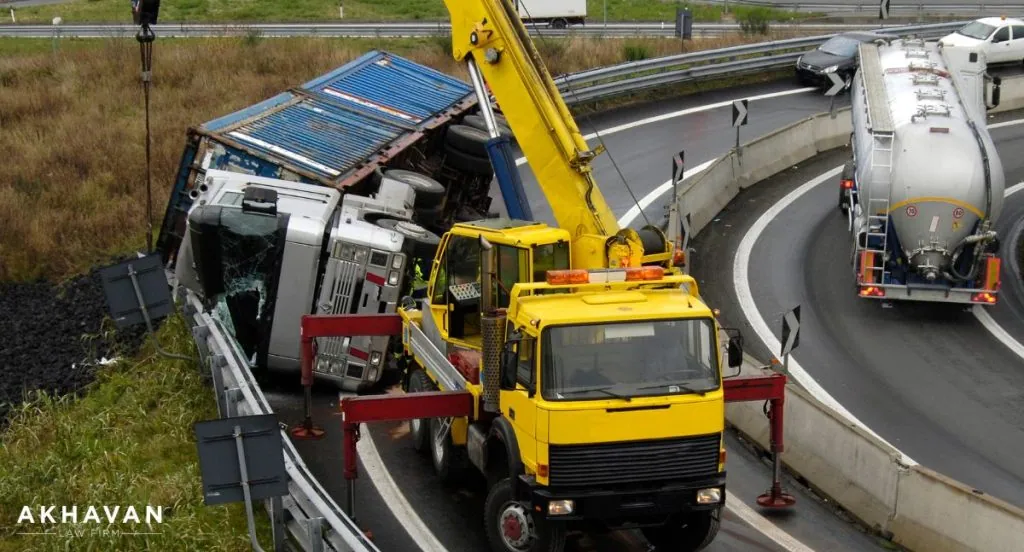
Truck accidents differ in scale and legal complexity because commercial vehicles operate under a regulatory framework and involve industry practices that ordinary car collisions do not. Evidence unique to truck cases includes electronic logging device (ELD) records, electronic data recorder (EDR or “black box”) downloads, carrier maintenance histories, and load manifests that can show unsafe practices or overloading. Liability can extend beyond the driver to the carrier, fleet manager, maintenance contractor, or vehicle manufacturer based on hiring, supervision, or mechanical failures. Higher-impact forces and larger vehicles also produce more severe injuries, which require detailed medical and economic documentation to prove long-term damages. Recognizing these differences early guides preservation requests and expert retention to build a complete liability and damages picture.
How Do Federal and State Trucking Regulations Affect My Case?
Federal rules set by the FMCSA impose enforceable duties on carriers and drivers—violations of hours-of-service, vehicle maintenance, or driver qualification standards create powerful evidence of negligence. Attorneys use FMCSA inspections, roadside citations, and carrier compliance histories to establish patterns of noncompliance that support liability and punitive considerations. State-level nuances can affect how evidence is admitted, statute-of-limitations deadlines, and comparative-fault rules; local court knowledge helps craft pleadings and preservation letters that respect procedural requirements. Early, state-compliant preservation notices and regulatory citation gathering are vital because ELD/EDR data retention and carrier document policies vary; an attorney experienced in both federal and state contexts ensures collection is timely and admissible.
Los Angeles-Specific Truck Accident Challenges and Local Expertise
Navigating a truck accident claim in Los Angeles presents unique complexities that demand local expertise. With the Port of Los Angeles and Port of Long Beach serving as major global shipping hubs, the region experiences an exceptionally high volume of commercial truck traffic on its dense network of freeways, including the I-5, I-10, CA-60, and CA-91. This concentration of heavy vehicles, combined with notorious traffic congestion, contributes to a distinct pattern of truck accidents, often involving multi-vehicle pile-ups, lane change violations, and brake failures on steep grades.
A lawyer specializing in Los Angeles truck accidents understands not only federal FMCSA regulations but also how they intersect with California Vehicle Code and local ordinances specific to LA County. They are familiar with the local court systems, from the Superior Court of Los Angeles County to various municipal courts, and have established relationships with local accident reconstructionists, medical specialists, and expert witnesses who can provide compelling testimony tailored to the unique conditions of Southern California roadways. This localized knowledge is crucial for effective evidence preservation, understanding local traffic patterns, and navigating the specific legal landscape to maximize compensation for victims in the greater Los Angeles area.
Local Insight: Data from the California Highway Patrol (CHP) often highlights specific stretches of Los Angeles freeways, such as the interchange of the I-5 and CA-60, as hotspots for commercial vehicle incidents. An attorney with deep local roots can leverage this understanding to anticipate common defense strategies and build a stronger case based on regional accident trends and enforcement patterns.
How Do I Choose the Best Truck Accident Lawyer Near Los Angeles?
Choosing the best local truck accident lawyer means evaluating specialization, outcomes, resources, and communication style to determine who will vigorously pursue your claim. Look for demonstrable experience with commercial vehicle litigation, familiarity with FMCSA rules, access to accident reconstruction and telematics experts, and a track record of handling multi-party claims. Verify trial experience and whether the attorney routinely prepares cases for trial rather than settling prematurely—this readiness often increases settlement leverage. During consultations, ask targeted questions about past truck cases, evidence-preservation practices, expert networks, and how the attorney will communicate case developments. After reading evaluation guidance, consider reaching out to an attorney for a focused discussion.
To convert website visitors into clients by providing information about legal services and encouraging direct contact for consultations.
What Qualities Should I Look for in an Experienced Truck Accident Attorney?
Identify attorneys who specialize in commercial vehicle litigation, show proven results in truck cases, and maintain relationships with reconstruction and telematics experts. Specialization is evident when attorneys can describe ELD/EDR preservation procedures, past outcomes with similar injuries, and strategies for pursuing carrier records and maintenance histories. Practical indicators include clear contingency fee explanations, timely evidence preservation steps after intake, and trial readiness—such attorneys will explain litigation timelines and potential expert costs. Client communication practices also matter: ask how often you will receive updates and who will be your point of contact. These qualities reduce uncertainty and increase confidence in your representation.
The experience of individuals injured in motor vehicle accidents can vary significantly, with some finding the claims process stressful and requiring legal counsel, while others report smooth recoveries without legal intervention. A study highlighted that the majority of participants were influenced by expectations regarding injury recovery and timely healthcare decisions, emphasizing the need for accessible, objective information about the claims process through online channels and social media.
What Questions Should I Ask During a Truck Accident Lawyer Consultation?
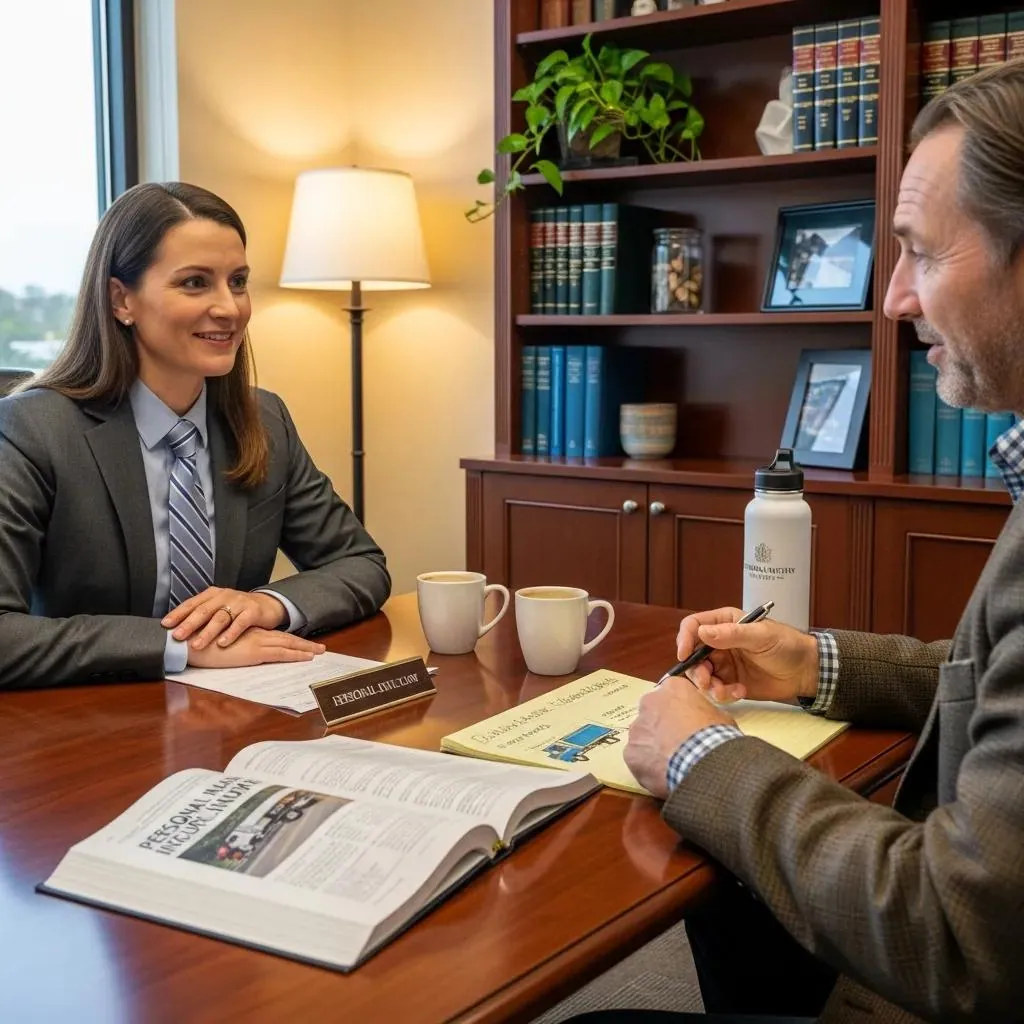
Preparing prioritized questions helps you evaluate fit, strategy, and fee transparency during initial meetings with prospective attorneys. Bring copies of medical records, the police report, photos, and any correspondence from insurers to get a substantive assessment during consultation. Ask about the lawyer’s experience with ELD/EDR preservation, sample case results in similar matters, estimated timelines, and how costs and fees are handled. Use the following prioritized list of consultation questions to structure the meeting and compare responses across attorneys.
- What is your specific experience handling truck accident cases and have you tried similar matters?
- How will you preserve ELD/EDR data and obtain maintenance and carrier records quickly?
- What is your contingency fee percentage and how are case costs advanced and repaid?
- Who will be my primary point of contact and how often will I receive updates?
These questions reveal an attorney’s competence, resources, and transparency; their answers help you choose counsel who aligns with your expectations and case needs.
How Are Truck Accident Lawyer Fees Structured?
Truck accident lawyers commonly work on contingency fees, meaning payment is a percentage of recovery, which aligns attorney incentives with client outcomes and removes upfront payment barriers. Contingency agreements typically specify the percentage the lawyer will receive if the case settles or results in a judgment, and they clarify who advances litigation costs such as expert fees, depositions, and records retrieval. Clear fee agreements should describe subtraction of costs from gross recovery and provide sample calculations so clients understand net proceeds. Transparency about fees, costs, and how liens (medical or Medicare) will be handled is critical before signing a representation agreement. The table below compares common fee models and what clients can expect.
Introductory explanation: The following table compares typical fee arrangements and how costs are handled so you can assess financial exposure and net recovery expectations.
| Fee Model | Typical Percentage | Who Advances Costs |
|---|---|---|
| Contingency (Standard) | 33%–40% of recovery | Attorney advances costs; repaid from recovery |
| Sliding Scale Contingency | 25%–40% depending on stage | Attorney advances costs; higher % if case goes to trial |
| Hourly or Hybrid | Varies; hourly plus contingency | Client may need to advance some costs in hybrid models |
What Is a Contingency Fee and How Does It Work?
A contingency fee means the attorney is paid a percentage of the settlement or judgment only if the case recovers money, reducing financial barriers for injured clients who cannot afford hourly counsel. Typical contingency ranges vary by jurisdiction and case complexity, often falling in the mid-30% range for straightforward settlements and increasing if a case proceeds to trial. A worked example makes the concept concrete: if a case settles for $150,000 and the agreed fee is 33%, the attorney fee would be $49,500 before costs, and case expenses would then be deducted to determine the client’s net recovery. Contingency arrangements usually require a signed agreement that explains percentages, costs, and client responsibilities to avoid surprises.
To convert website visitors into clients by providing information about legal services and encouraging direct contact for consultations.
Are There Any Upfront Costs or Hidden Fees?
Clients commonly worry about upfront costs; in contingency arrangements attorneys often advance expenses like medical record retrieval, expert fees, and court filing costs, with repayment from recovery at case conclusion. Ask specifically whether the attorney expects any retainer, whether costs accrue interest, and how unrecovered costs are handled if there is no recovery. Transparency best practices include receiving a written fee agreement, an itemized estimate of potential costs, and periodic accounting during the case. Request sample scenarios for low, medium, and high-cost cases to understand financial exposure and avoid surprises later.
What Is the Truck Accident Claim Process and Timeline?
The truck accident claim process typically begins with immediate evidence preservation and investigation, proceeds through demand and negotiation, and may culminate in mediation or trial if settlement is not achieved. Early phases focus on securing EDR/ELD data, medical records, witness statements, and carrier documents; these tasks are time-sensitive and often determine whether a claim can be successfully proven. Negotiation involves presenting a demand package with liability and damages substantiation; if negotiations stall, preparation for litigation and discovery can extend timelines by months. The table below outlines typical phases and timeframes to set realistic expectations for recovery attempts.
Introductory explanation: The following table maps investigation and litigation phases to typical timeframes so you can anticipate how long each stage usually takes.
| Phase | Activity | Typical Timeframe |
|---|---|---|
| Immediate Investigation | Evidence preservation, EDR/ELD requests, witness interviews | Days to 2–4 weeks |
| Medical & Discovery | Ongoing treatment documentation, records collection, expert reports | 1–6 months |
| Demand & Negotiation | Demand letter, insurer response, settlement talks | 2–6 months |
| Pretrial & Trial | Formal discovery, depositions, motions, trial preparation, potential trial | 6–18+ months |
How Does the Investigation and Evidence Gathering Work?
Investigation begins with an attorney or investigator issuing preservation letters to carriers and requesting telematics/EDR data before it can be overwritten, while also collecting maintenance logs, driver qualification files, and inspection reports. Experts—accident reconstructionists, EDR analysts, and vocational or medical specialists—are retained to interpret technical data, model crash dynamics, and quantify long-term damages. Because some data is overwritten quickly, early issuance of preservation notices and subpoenas prevents loss of crucial evidence and strengthens settlement position. Coordinated investigation between counsel and experts converts disparate records into a coherent narrative of liability and damages.
What Happens During Settlement Negotiations and Trial?
During negotiation, attorneys assemble demand packages with liability demonstration, medical proof, and economic loss calculations, then present these to adjusters to seek a settlement consistent with proved damages and policy limits. Mediation may be used to narrow differences, and skilled negotiators use demonstrative evidence and expert summaries to persuade decision-makers. If settlement is not achievable, litigation proceeds with formal discovery, depositions, motions, and trial preparation; trial readiness often increases settlement offers because carriers recognize the risk and cost of trial. Understanding negotiation strategies and the trial calendar helps clients set realistic expectations for timing and potential outcomes.
How Much Compensation Can I Expect from a Truck Accident Settlement?
Compensation in truck accident settlements includes economic damages (medical bills, lost wages), non-economic damages (pain and suffering), and sometimes punitive damages where egregious conduct is shown; amounts vary widely based on injury severity, liability clarity, and insurance policy limits. Truck cases often yield higher settlements than typical car crashes because injuries are more severe and commercial carriers maintain larger insurance policies. Factors such as comparative fault, preexisting conditions, and the quality of medical documentation strongly influence final values. The table below outlines injury types, common compensation components, and typical ranges or influencing factors to provide realistic expectations.
Introductory explanation: The table compares typical injury types with compensation components and the main variables that influence settlement ranges.
| Injury Type | Compensation Components | Typical Range / Influencing Factors |
|---|---|---|
| Minor soft-tissue | Medical bills, short-term wage loss, minor pain & suffering | Low five-figure; influenced by documentation |
| Fractures / surgeries | Medical costs, lost earnings, long-term care, pain & suffering | Mid to high five-figure or low six-figure; influenced by permanency |
| Catastrophic (paralysis, TBI) | Lifetime medical care, lost earning capacity, extensive non-economic damages | High six-figure to multi-million; influenced by policy limits and liability certainty |
What Factors Influence the Amount of Compensation?
Major factors shaping compensation include injury severity and prognosis, extent of medical treatment and its documentation, degree of liability and any comparative fault by the claimant, and available insurance limits of the responsible parties. Additional influencers are the presence of aggravating carrier conduct (e.g., falsified logs), successful use of EDR/ELD data to prove negligence, and the caliber of retained experts to quantify long-term impacts. Illustrative scenarios show how a clear ELD violation combined with a permanent impairment typically yields a significantly higher recovery than a minor sprain with disputed liability. Careful documentation and targeted expert testimony directly increase settlement potential.
How Do Truck Accident Settlements Compare to Car Accident Settlements?
Truck accident settlements are often larger than car accident settlements because commercial carriers carry higher policy limits, injuries are more severe, and multiple defendants may be available to reach recovery. The combination of regulatory violations, company safety records, and EDR/ELD evidence can elevate both liability certainty and settlement value. While car accident claims frequently resolve for lower amounts tied to smaller bills and less permanent injury, truck claims that demonstrate catastrophic damage, lost earning capacity, or regulatory noncompliance attract significantly higher settlements. Understanding these differences helps set realistic expectations about potential recovery and the investigative investment required.
To convert website visitors into clients by providing information about legal services and encouraging direct contact for consultations.
Disclaimer: The information provided on this page is for general informational purposes only and should not be considered legal advice. Reading this page, using this website, or contacting us through this page does not create an attorney-client relationship. Every legal matter is different, and the information here may not apply to your specific situation. You should not act or rely on any information on this page without first consulting a qualified attorney about your individual case.

Edwin E. Akhavan is the founding attorney of Akhavan Law Firm APC, a personal injury law firm in Beverly Hills, California. State Bar of California #270338. About the firm