On this page
- Executive Summary
- Why rear-end crashes so often cause delayed neck symptoms
- Immediate safety and medical triage: what to do in the first hour
- How clinicians evaluate neck pain after a rear impact
- Practical home care in the first 48 hours (and what to avoid)
- Symptom map: what your pain pattern can indicate
- Medical documentation that actually holds up later
- California reporting, insurance steps, and deadlines to know
- How liability is analyzed in rear-end collisions
- What compensation can include when neck symptoms persist
- When to involve a lawyer—and what a personal injury lawyer actually does
- Smart next steps for the next 7 days
- Clear takeaways: protect your health, then protect your claim
- Frequently Asked Questions
- Don’t Let “Delayed Neck Pain” Turn Into a Delayed Case
Executive Summary
Neck pain after being rear-ended is often a delayed-onset whiplash pattern caused by rapid extension–flexion forces that irritate cervical joints and strain soft tissue. The definitive next step is to triage for red flags immediately and, if symptoms persist without emergency signs, obtain a documented clinical exam within 24–72 hours while using short-interval ice/heat and gentle motion to protect function.
- Delayed symptoms are medically common: Inflammation, facet joint irritation, and protective muscle spasm can build over hours, so pain and stiffness may not peak until later the same day or the next.
- Red flags change the plan right away: Weakness, progressive numbness/tingling into the arm/hand, balance problems, severe or worsening headache, vomiting/confusion, or midline neck tenderness warrant same-day urgent evaluation rather than home care.
- Documentation + timely exam protect outcomes: A same-day symptom timeline and an evaluation within 24–72 hours (ROM testing + neurologic screen, with imaging only when indicated) improves medical decision-making and reduces disputes about delayed-onset whiplash.
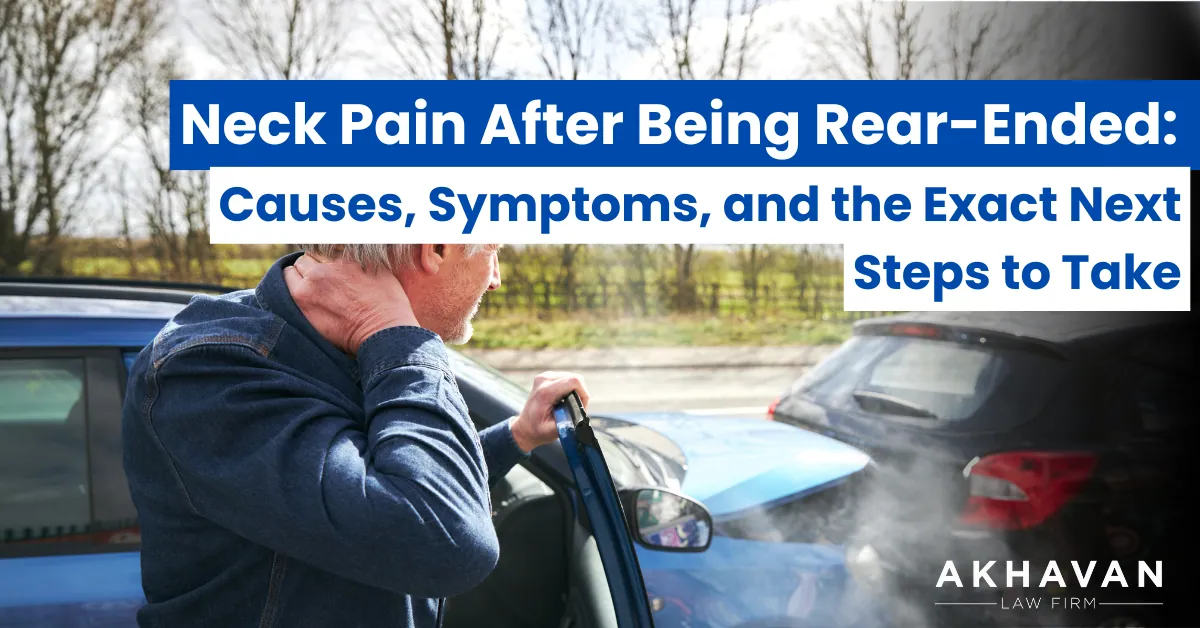
Neck pain after being rear-ended is a common post-collision injury pattern caused by rapid acceleration–deceleration forces on the cervical spine and surrounding soft tissue. The neck can snap into extension and then flexion in fractions of a second. This can strain the sternocleidomastoid, upper trapezius, levator scapulae, and deep neck flexors. It can irritate cervical facet joints and trigger muscle spasm. It can also stress intervertebral discs, especially at C5–C6 and C6–C7, where motion is high. In local stop-and-go traffic, a low-speed impact near an intersection or freeway on-ramp can still generate enough force to start symptoms hours later. Common symptoms include stiffness, reduced range of motion, headaches at the base of the skull, pain between the shoulder blades, jaw tightness, dizziness, tingling into the arm, or a “heavy” feeling in the head. Red flags include worsening weakness, numbness in the hand, loss of balance, severe headache, midline neck tenderness, or symptoms that do not improve over 24–48 hours. The exact next steps are clear and time-sensitive. Document the crash details and the first onset time of symptoms the same day. Use ice for 10–15 minutes at a time for the first 24–48 hours if swelling or sharp pain is present, then consider heat for muscle tightness if it helps. Avoid prolonged collar use unless a clinician directs it, because early gentle motion often protects function. Seek urgent evaluation if red flags occur, if pain is severe, or if you hit your head. Otherwise, schedule a clinical exam within 24–72 hours for range-of-motion testing, a neurologic screen, and guidance on graded return to activity, because delayed whiplash symptoms are common and early assessment improves decision-making.
Why rear-end crashes so often cause delayed neck symptoms
Rear-end collisions commonly trigger whiplash-type injuries because the head and torso move at different speeds, loading the cervical spine in milliseconds. Symptoms can be delayed because inflammation, protective muscle spasm, and facet joint irritation often build over several hours.
In a typical rear impact, the seatback drives the torso forward first while the head momentarily lags. That sequence produces:
- Rapid extension then flexion (or a complex “S-curve” pattern) that stresses cervical joints and soft tissues.
- Facet joint compression/strain (especially mid-to-lower cervical levels), which can refer pain into the shoulders or upper back.
- Muscle guarding in the upper trapezius, levator scapulae, suboccipitals, and deep neck flexors—often felt as stiffness and reduced rotation.
- Disc and ligament loading at higher-motion segments, frequently C5–C6 and C6–C7, which can contribute to arm symptoms if nerve roots are irritated.
Low-speed impacts in stop-and-go traffic can still injure soft tissue. Vehicle damage is not a reliable measure of occupant force exposure because bumper systems and crumple elements can absorb energy while the occupant still experiences a rapid acceleration change.
Immediate safety and medical triage: what to do in the first hour
Your first priority after a rear-end crash is to rule out emergencies and create a clear, time-stamped record of what happened. If severe symptoms or neurologic changes appear, the correct next step is urgent medical evaluation, not self-treatment.
- Move to safety if vehicles are drivable and it is safe to do so; activate hazard lights.
- Call 911 when anyone is injured, traffic is blocked, or there is a suspected DUI/hit-and-run.
- Request medical help immediately if you have:
- Loss of consciousness, confusion, or vomiting
- Severe headache or new vision changes
- Midline neck tenderness after the crash
- Weakness, numbness, or tingling into the arm/hand
- Loss of balance, clumsiness, or new gait changes
- Document the scene before vehicles move (if safe):
- Photos of all vehicles, license plates, and the point of impact
- Wide-angle shots showing lane positions, traffic signals, skid marks, debris
- Driver’s license, insurance information, and contact details
- Names and numbers of witnesses
In California, a police report may or may not be generated for minor collisions, but you should still gather objective evidence at the scene because it can become critical later if liability is disputed.
How clinicians evaluate neck pain after a rear impact
A proper exam focuses on identifying fracture risk, neurologic compromise, and treatable soft-tissue injury patterns. The standard approach combines history, a physical exam, and imaging only when clinically indicated.
At an urgent care, emergency department, or primary care visit, expect:
- Mechanism and symptom timeline (exact onset time, progression, and aggravating movements)
- Range-of-motion assessment (rotation, flexion/extension, side-bending)
- Neurologic screening (strength, sensation, reflexes, and provocative tests for radicular pain)
- Palpation for midline tenderness vs. muscular tenderness
Imaging is not automatic. Clinicians often use validated decision tools (for example, cervical spine clearance rules) to determine if X-rays or CT are needed. MRI is typically reserved for concerning neurologic findings, suspected significant disc/ligament injury, or persistent symptoms with red flags.
Practical home care in the first 48 hours (and what to avoid)
Early self-care should reduce pain and protect function without masking dangerous symptoms. The goal is controlled comfort plus gentle activity, not complete immobilization.
- Cold therapy: 10–15 minutes at a time during the first 24–48 hours if swelling or sharp pain is present.
- Heat therapy: after the initial inflammatory phase, heat can help muscle tightness if it improves comfort and mobility.
- Relative rest: avoid heavy lifting, impact exercise, or prolonged static postures that spike pain.
- Gentle motion: short, frequent neck movements within a comfortable range often help prevent stiffness.
- Sleep positioning: use a supportive pillow; avoid extreme neck flexion/extension.
Avoid: prolonged use of a soft collar unless a clinician instructs it; aggressive stretching that reproduces arm symptoms; “cracking” the neck; and delaying evaluation if neurologic symptoms appear.
Symptom map: what your pain pattern can indicate
The location and quality of symptoms help clinicians separate muscle strain from joint irritation or nerve involvement. Tracking specific patterns also improves your medical documentation and treatment planning.
| Feature / Metric | Specifications | Local Guidelines |
|---|---|---|
| Onset timing | Symptoms may start immediately or be delayed 6–24+ hours due to inflammatory response and muscle guarding. | Document the first onset the same day (notes, photos, timeline) and schedule a clinical exam within 24–72 hours if persistent. |
| Pain location | Neck stiffness, base-of-skull headache, upper back/shoulder blade pain, jaw tightness, or “heavy head.” | Report specific locations and triggers (turning, looking down, driving) at your visit; this guides targeted therapy. |
| Neurologic symptoms | Tingling, numbness, radiating arm pain, grip weakness may suggest nerve root irritation. | Seek urgent evaluation if weakness, progressive numbness, or coordination/balance problems occur. |
| Headache and dizziness | Can be cervicogenic headache, concussion, or vestibular involvement depending on associated signs. | If head impact, confusion, worsening headache, or vomiting occurs, get same-day emergency assessment. |
| Functional impact | Driving difficulty, reduced ROM, sleep disruption, missed work, limited lifting. | Track work restrictions and daily limitations; they are routinely relevant to medical planning and injury claims. |
Medical documentation that actually holds up later
Accurate, contemporaneous documentation is the backbone of both good healthcare and a credible injury claim. Your records should show a clear timeline, objective findings, and consistent follow-through.
To strengthen medical clarity:
- Write a same-day symptom log: pain score, stiffness, headache, dizziness, arm symptoms, sleep quality.
- Record objective limitations: “cannot rotate neck left to check blind spot,” “cannot sit 30 minutes without spasm,” etc.
- Keep receipts and visit summaries: urgent care notes, imaging reports, prescriptions, physical therapy attendance.
- Be consistent: describe symptoms the same way to each provider; inconsistencies are commonly exploited by insurers.
If your clinician gives home exercises or restrictions, follow them and keep proof of compliance. Gaps in care are frequently cited by insurers to argue the injury resolved.
California reporting, insurance steps, and deadlines to know
California has specific reporting rules and strict limitation periods that can affect recovery of medical expenses and other damages. Handling the administrative side correctly prevents avoidable disputes.
- DMV reporting (SR-1): California requires drivers to report a crash to the DMV within 10 days if there was injury (even minor), death, or property damage of more than $1,000. This is commonly done using the SR-1 form.
- Police report: If law enforcement responds, obtain the report number and later request the report through the agency’s records process.
- Insurance notice: Promptly notify your insurer and the at-fault driver’s insurer. Provide basic facts; avoid guessing speed, distances, or making fault admissions.
- Recorded statements: You are not required to give a recorded statement to the other driver’s insurer. If you choose to speak, keep it factual and limited.
- Statute of limitations (general): In California, personal injury claims are generally subject to a 2-year statute of limitations (Code of Civil Procedure § 335.1). Claims against public entities often require a much earlier government claim under the Government Claims Act.
How liability is analyzed in rear-end collisions
Rear-end crashes are often presumed to involve the trailing driver’s unsafe following distance or inattention, but liability can still be contested. Evidence that explains braking, lane changes, or mechanical issues can change the outcome.
Common liability factors include:
- Following too closely (Vehicle Code § 21703 requires a reasonable and prudent distance).
- Driver distraction (phone use, navigation, fatigue).
- Sudden stop defenses (often argued but not automatically exculpatory; facts matter).
- Chain-reaction impacts (multiple vehicles; fault can be shared).
- Commercial vehicles (company policies, maintenance records, and hours-of-service issues may apply).
If the crash involved rideshare, delivery, or a commercial fleet, liability analysis often expands beyond the driver to coverage layers, employer responsibility, and additional evidence sources (dispatch logs, app status, dashcam/telematics).
What compensation can include when neck symptoms persist
Recoverable damages in an injury claim typically include both economic losses (bills, wages) and non-economic losses (pain, interference with life). A clear treatment plan and proof of impact are central to valuing the case.
- Medical costs: ER/urgent care, imaging, primary care, PT, medications, specialist visits.
- Future care: additional therapy, pain management, or evaluation if symptoms persist.
- Lost income: missed work, reduced hours, diminished earning capacity if supported by evidence.
- Pain and suffering: physical pain, sleep disruption, reduced activities, emotional distress.
- Property damage: vehicle repair or total loss and related expenses.
If you want a detailed look at how a rear-impact case can be valued in California litigation, see California jury awards man $9 million in rear-end auto accident.
When to involve a lawyer—and what a personal injury lawyer actually does
Legal help is most valuable when injuries are ongoing, liability is disputed, there are multiple insurers, or you’re being pressured to settle early. A personal injury lawyer typically manages evidence, claim strategy, negotiations, and litigation deadlines while you focus on recovery.
Consider getting legal guidance when:
- You have radiating arm symptoms, documented disc injury, or prolonged functional limitations.
- The insurer disputes causation because symptoms started later that day or the next day.
- You’re advised to sign a medical authorization that is broad (it may expose unrelated history).
- There is a commercial defendant (truck, bus, delivery fleet) or a multi-car pileup.
- You’re offered a fast settlement before a full diagnostic workup is complete.
If you need representation for a rear-end collision injury claim, review the car accident service for case handling focused on collisions and injury documentation.
Smart next steps for the next 7 days
The first week is where many whiplash cases either resolve quickly or become persistent due to missed evaluation, over-rest, or poor documentation. A structured plan improves both recovery and clarity.
- Get examined within 24–72 hours if pain, stiffness, headache, or neurologic symptoms persist.
- Follow the care plan and attend recommended follow-ups; keep all discharge paperwork.
- Track daily function (driving tolerance, work capacity, sleep, exercise limits).
- Avoid early “one-and-done” settlements until you understand prognosis and treatment needs.
- Preserve evidence: photos, repair estimates, tow/storage bills, and any dashcam footage.
Clear takeaways: protect your health, then protect your claim
Neck symptoms after a rear-end crash are medically common and legally consequential, especially when pain starts later the same day. Fast, specific documentation and timely clinical evaluation are the two actions that most reliably reduce risk—risk to your recovery and risk to your ability to prove what happened.
- Escalate care immediately for weakness, progressive numbness, severe headache, balance problems, or midline neck tenderness.
- Get a documented exam within 24–72 hours if symptoms persist beyond the initial period.
- Keep a precise timeline (crash details, onset time, symptom progression, work impact).
- Know California’s key rules: SR-1 reporting within 10 days when thresholds are met, and a general 2-year injury filing window (with shorter deadlines for public entities).
Frequently Asked Questions
Don’t Let “Delayed Neck Pain” Turn Into a Delayed Case
Rear-end crash neck injuries are notorious for showing up hours later—right when the at-fault insurer starts building a file that quietly assumes you’re fine. If you wait too long to get evaluated, don’t document symptoms the same day, or casually “talk it through” on a recorded call, you can accidentally hand the insurance company the exact arguments they use to shrink or deny your claim.
Here’s what typically goes wrong when people try to handle this alone:
- Your medical timeline gets attacked: “If it was real, you would’ve gone right away.” Delayed onset is common with whiplash, but you still need clean documentation and a consistent treatment record to prove it.
- Gaps in care get weaponized: Missing follow-ups or “toughing it out” can be framed as proof you recovered—even if you were just trying to keep working.
- You say one wrong thing early: Offhand comments like “I’m okay” at the scene or on a recorded statement can become the centerpiece of a lowball offer.
- You sign broad medical authorizations: Insurers may go fishing through unrelated history to argue your symptoms were “pre-existing.”
- You settle before you know what you’re dealing with: Neck injuries can evolve; settling early can leave you paying for ongoing care out of pocket.
Akhavan Law Firm helps you do this the smart way: preserve evidence, lock down a credible symptom timeline, coordinate claim strategy around your documented medical care, and push back when insurers try to downplay delayed whiplash symptoms. If your neck pain, headaches, dizziness, or arm tingling didn’t show up immediately—or your symptoms aren’t improving—you need a plan now, not after the adjuster has already decided what your case is “worth.”
Disclaimer: The information provided on this page is for general informational purposes only and should not be considered legal advice. Reading this page, using this website, or contacting us through this page does not create an attorney-client relationship. Every legal matter is different, and the information here may not apply to your specific situation. You should not act or rely on any information on this page without first consulting a qualified attorney about your individual case.

Edwin E. Akhavan is the founding attorney of Akhavan Law Firm APC, a personal injury law firm in Beverly Hills, California. State Bar of California #270338. About the firm